Darshan daily · 4:30 am–7:00 pm

Support the temple
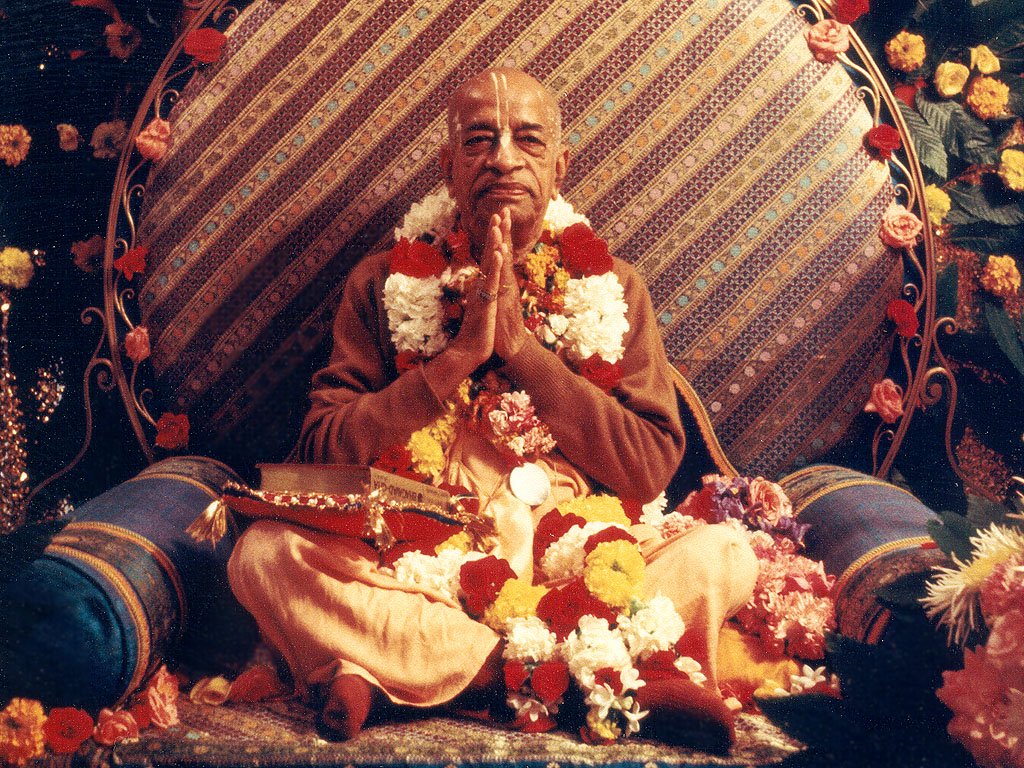
His Divine Grace A.C. Bhaktivedanta Swami Prabhupada

His Divine GraceA.C. Bhaktivedanta Swami Prabhupāda

A lifetime
in service

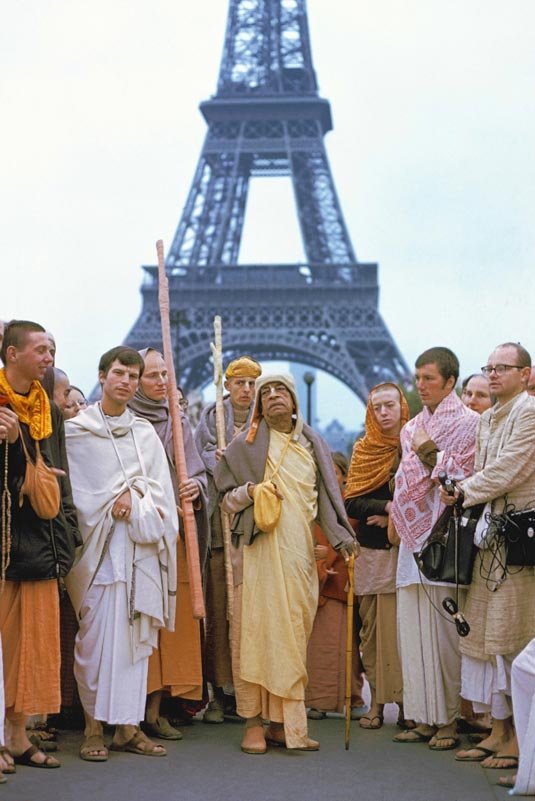
Srila Prabhupada standing near the Eiffel Tower in Paris
Śrīla Prabhupāda in Paris

The teacher who made a world of difference.

His Divine Grace A.C. Bhaktivedanta Swami Prabhupāda brought the living tradition of bhakti-yoga from India to a global audience and founded the International Society for Krishna Consciousness.

Born Abhay Charan De in Calcutta in 1896, he met the renowned Gauḍīya Vaiṣṇava teacher Śrīla Bhaktisiddhānta Sarasvatī in 1922. At that first meeting he was asked to share Lord Krishna’s teachings with the English-speaking world. He accepted initiation in 1933 and spent the following decades studying, writing and preparing to fulfil that instruction.

In 1965, aged sixty-nine, he sailed alone to New York aboard the cargo ship Jaladuta. With little money, trunks of his books and unwavering purpose, he began teaching from a small storefront. ISKCON was formally incorporated in 1966. During the next eleven years he circled the globe, established temples and communities, trained students and made India’s devotional wisdom available through books, lectures and personal example.

14
world journeys
100+
centres established
70+
volumes authored
6
continents reached
Signature of A.C. Bhaktivedanta Swami Prabhupada Founder-Ācārya of ISKCON
Chronicles of Śrīla Prabhupāda

Beginnings in Calcutta

Abhay Charan De was born on 1 September into a devout Vaiṣṇava family. His father, Gour Mohan De, nurtured his devotion from childhood, encouraging worship, music and the annual Ratha-yātrā festival that young Abhay organised with his friends.

A life-changing meeting

In Calcutta, Abhay met Śrīla Bhaktisiddhānta Sarasvatī. The respected teacher immediately asked him to present Krishna consciousness in English. Abhay recognised the request as his life’s direction, accepted initiation in 1933 and dedicated decades to study, writing and service.

The voyage west

At sixty-nine, Śrīla Prabhupāda crossed the Atlantic aboard the Jaladuta. The difficult journey included two heart attacks. He arrived in New York on 17 September with his translations of the Śrīmad-Bhāgavatam, a small amount of Indian currency and faith in his teacher’s instruction.

ISKCON is founded

Teaching from a modest storefront on New York’s Lower East Side, he gathered a young community around chanting, study and prasādam. On 11 July he formally incorporated the International Society for Krishna Consciousness, giving the growing movement a clear spiritual and organisational home.

Krishna consciousness takes root in Paris.

Early disciples carried Śrīla Prabhupāda’s mission to France. With the worship of Jagannātha, Baladeva and Subhadrā, ISKCON became established in Paris—laying the foundation for a permanent temple community and public chanting in the French capital.

Śrī Śrī Rādhā-Parisīśvara are welcomed.

Śrīla Prabhupāda visited the temple at 4 rue Le Sueur and installed the beautiful Deities of Śrī Śrī Rādhā-Parisīśvara. Their worship became the heart of ISKCON Paris and continues today at the Sarcelles temple.

Śrīla Prabhupāda returns to Paris.

Returning from 8–15 June, Śrīla Prabhupāda spoke with disciples, guests and thinkers, gave classes on the Bhagavad-gītā, and addressed a large Hare Krishna festival at the Salle Pleyel. Photographs of him with his Paris disciples preserve the warmth and momentum of this visit.

A living legacy

By the time he departed this world on 14 November, Śrīla Prabhupāda had established a worldwide spiritual movement. His books, communities and standards of worship remain ISKCON’s foundation—and his relationship with Paris continues through every offering made to Rādhā-Parisīśvara.

A spiritual vision made practical.

01 / 06

01

Books and publishing

Ancient wisdom, made accessible.

Śrīla Prabhupāda’s books brought the heart of India’s devotional wisdom to readers around the world. Through clear translations and commentaries on the Bhagavad-gītā, Śrīmad-Bhāgavatam and Śrī Caitanya-caritāmṛta, he made profound spiritual teachings understandable, practical and relevant to everyday life.

02

Spiritual communities

A home for devotion around the world.

Temples, āśramas and cultural centres gave people places to learn, worship and serve together. He shaped ISKCON as a worldwide family where spiritual practice could be lived in community rather than kept as theory.

03

Food and hospitality

Sharing sanctified food without discrimination.

He taught that no one within reach of a temple should go hungry. The culture of preparing and freely sharing prasādam inspired large-scale vegetarian food-relief programmes and daily hospitality in ISKCON communities.

04

Simple living high thinking

Working with nature, thinking with depth.

Rural communities and sustainable farms formed part of his vision for a balanced society—one that values local food, meaningful work, responsible use of the earth and time for spiritual inquiry.

05

Animal welfare

Compassion extended to every living being.

His teaching of non-violence challenged a human-centred view of care. Cow protection, vegetarian living and respect for all species became practical expressions of the understanding that all life is sacred.

06

Education, culture and art

Devotion expressed through a complete culture.

Music, dance, philosophy, cuisine, architecture and festivals became inviting ways to experience bhakti. He encouraged scholarship and artistic excellence while keeping their purpose centred on service and spiritual awakening.

Explore the ISKCON philosophy and the community.